

Transition Program
Learning about my new School
I will be going to a new high school. This is an exciting time because I will be learning new things, meeting new friends, and exploring a bigger school with different learning areas.
To help me feel ready click on the link below and explore Seaford Secondary College.
Learning about my new School – at Seaford Secondary College RS
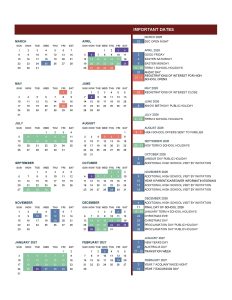
Transition Calendar
Positive Behaviour for Learning
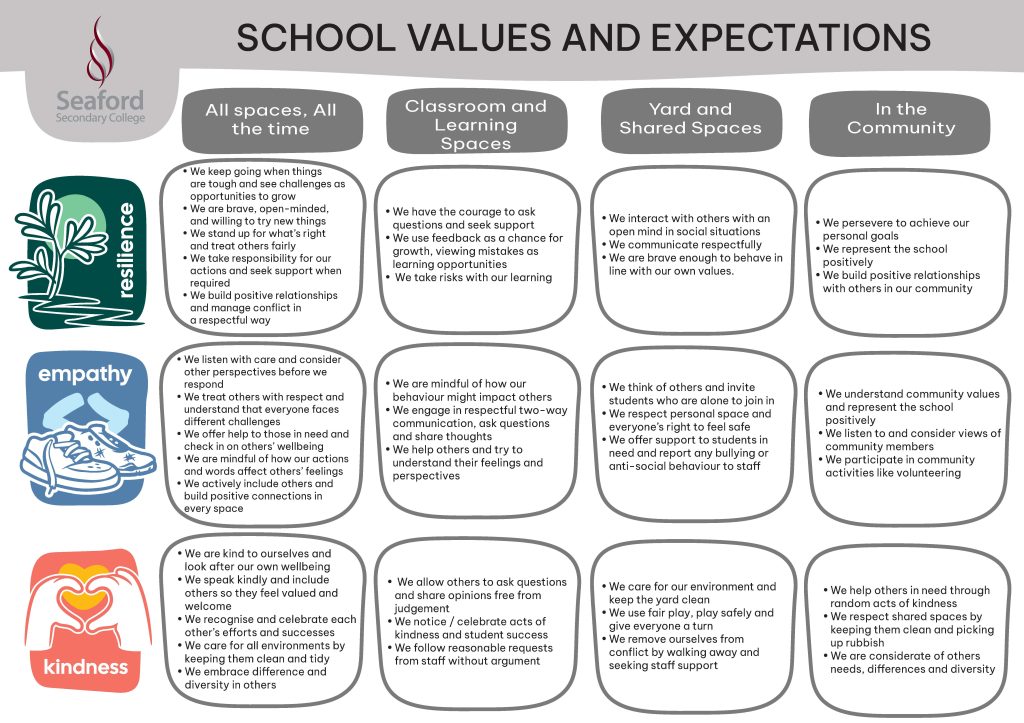
At Seaford Secondary College we believe that students learn best when they feel safe, supported, and connected to school. Our Positive Behaviour for Learning approach focuses on explicitly teaching and reinforcing the behaviours that help all students succeed at school. Through consistent expectations and responses, as well as acknowledging positive choices, we work closely with students to build a culture of kindness, empathy and resilience so that every learner can thrive.
A Purpose-Built Middle School
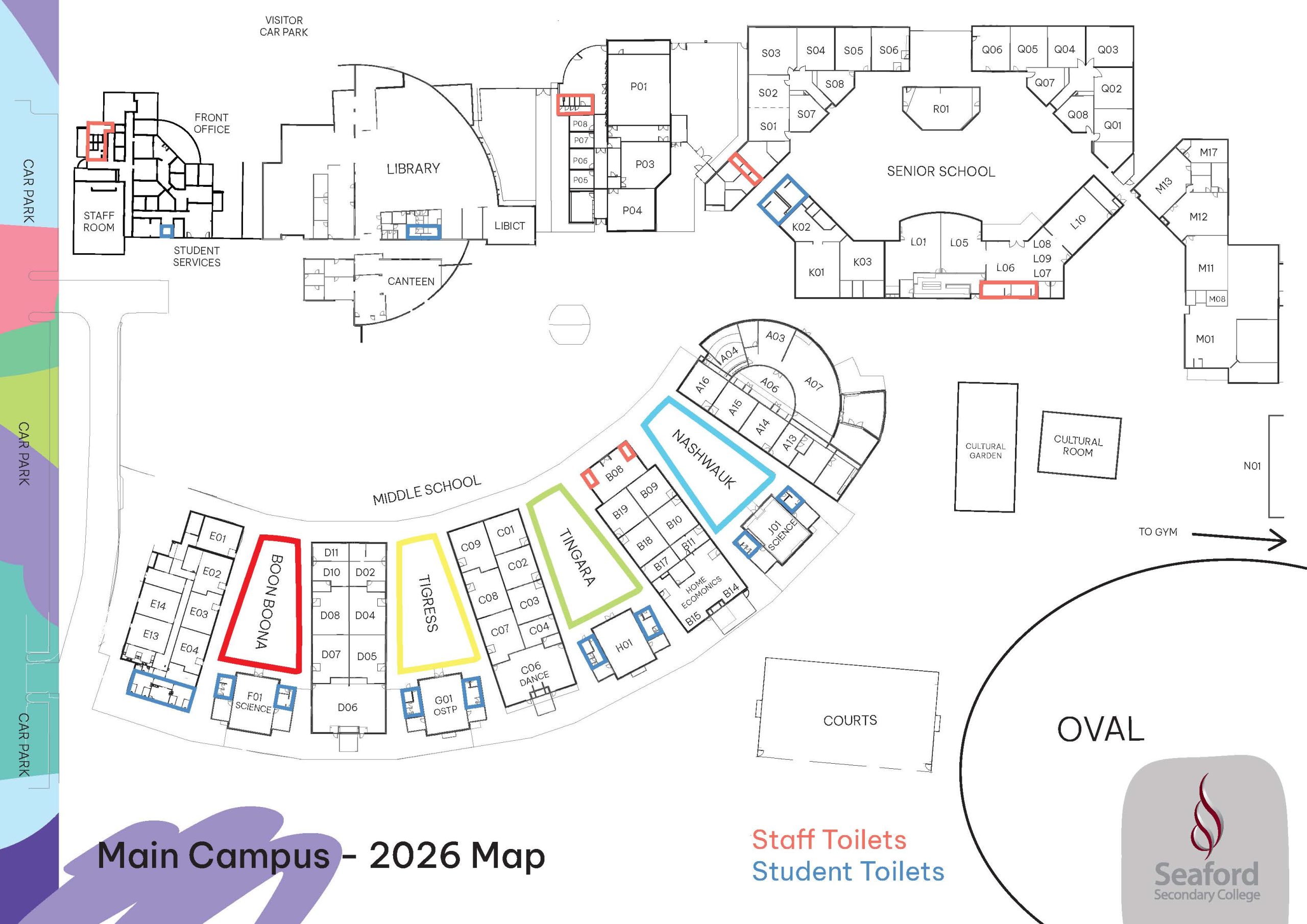
Our unique purpose-built Middle School provides a supportive environment designed specifically to support the transition from a primary school to secondary school. Students are part of a house structure, each with 3-4 classes of year 7-9 students, and a dedicated House Leader within a safe, supervised courtyard space. This sub-school structure within the school helps students build strong relationships with staff and peers while feeling a strong sense of belonging within their house community.
Supporting a Strong Transition to Secondary School
Starting secondary school is an important step for students and families. To support a smooth and successful transition, as well as our end of year transition program, we run an additional Week 1 transition program at the start of the year. This provides students with extra time to become familiar with our values, routines, expectations, teachers and their learning environment. During this week, there is a strong focus on building connections and relationships with peers and staff, helping students feel comfortable and confident in their new school community before the full academic program begins.
This is followed by our Acquaintance Night in week 2 and our year 7 excursion to Woodhouse Activity Centre in week 4. Year 7 students also have year 11 mentors who work with them in Care Group to offer additional support and guidance, as well as additional connections in the school.
Additional Transition Support
For some students, an extended transition can make a significant difference to their confidence and readiness for secondary school. We offer a four-week additional transition program for students who have been identified by their primary school or families as requiring extra support before starting with us.
This program is developed and coordinated by our Inclusion Team and focuses on helping students become familiar with the school environment, routines and expectations while building relationships with staff and peers. The program supports students to begin school feeling safe, confident and ready to learn.
A Strong Wellbeing and Inclusion Team
Student wellbeing is supported by a dedicated team who work together to ensure every student is known and supported. This includes:
- Director of Learning Support, Inclusion & Wellbeing – Ilana Heapy
- Learning Support Leader – Michelle Forrest
- Inclusion Leader – Amanda Carter
- Middle School Wellbeing Leader – Kellie Holliday
- Senior School Wellbeing Leader – Bevan Constable
- 4 x Middle School House Leaders
- 3 x Senior School Year level leaders
- 4 x Youth Workers
Together, this team supports students’ social, emotional and learning needs and works closely with families and teachers to ensure the right supports are in place.
Our Wellbeing and Pathways program also provides additional wellbeing strategies and allows students to set personal goals for their learning which they discuss with parents / carers and their teaching through our Parent Teacher Interviews.
Year 7 Curriculum
In year 7 students will experience the full range of curriculum subjects which will allow them to make informed choices in future years as well as meet the requirements of the South Australian Curriculum. These subjects include;
| Subject | Length of Time |
|---|---|
| English | Full year |
| Maths | Full year |
| Science | Full year |
| Humanities | Full year |
| Health and Physical Education | Full year |
| Arts | Full year |
| Languages (Choice of Japanese or Spanish) | One Semester |
| Technologies | One Semester |
Care Groups that Build Connection
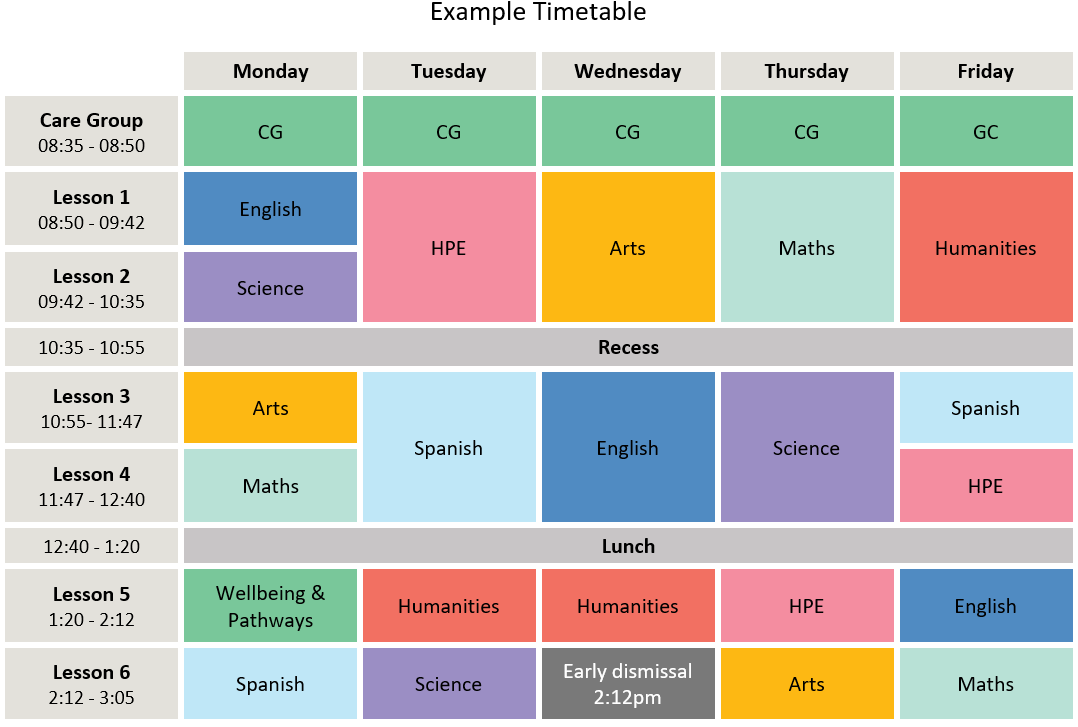
Students are placed into Care Groups, where students are placed together for 5 of their 7 subjects and their Care Group teacher works closely with them, teaching them for multiple subjects. This structure allows teachers to build strong relationships with their students and helps create a classroom environment where students feel safe, known and supported. These connections provides and important adult at school to play an important role in building confidence, belonging and engagement with learning.
Using Data to Support Learning Growth
Our staff use a wide range of available data to develop a strong understanding of each students learning strengths and needs. This includes information from previous schooling, assessments and ongoing classroom evidence. We also engage with families and students to understanding their personal perspectives of interests, strengths and areas for growth.
By using this information, teachers are able to plan and adapt learning experiences that better cater for individual student needs. This helps ensure that all students are appropriately challenged, supported and able to demonstrate strong learning growth over time.